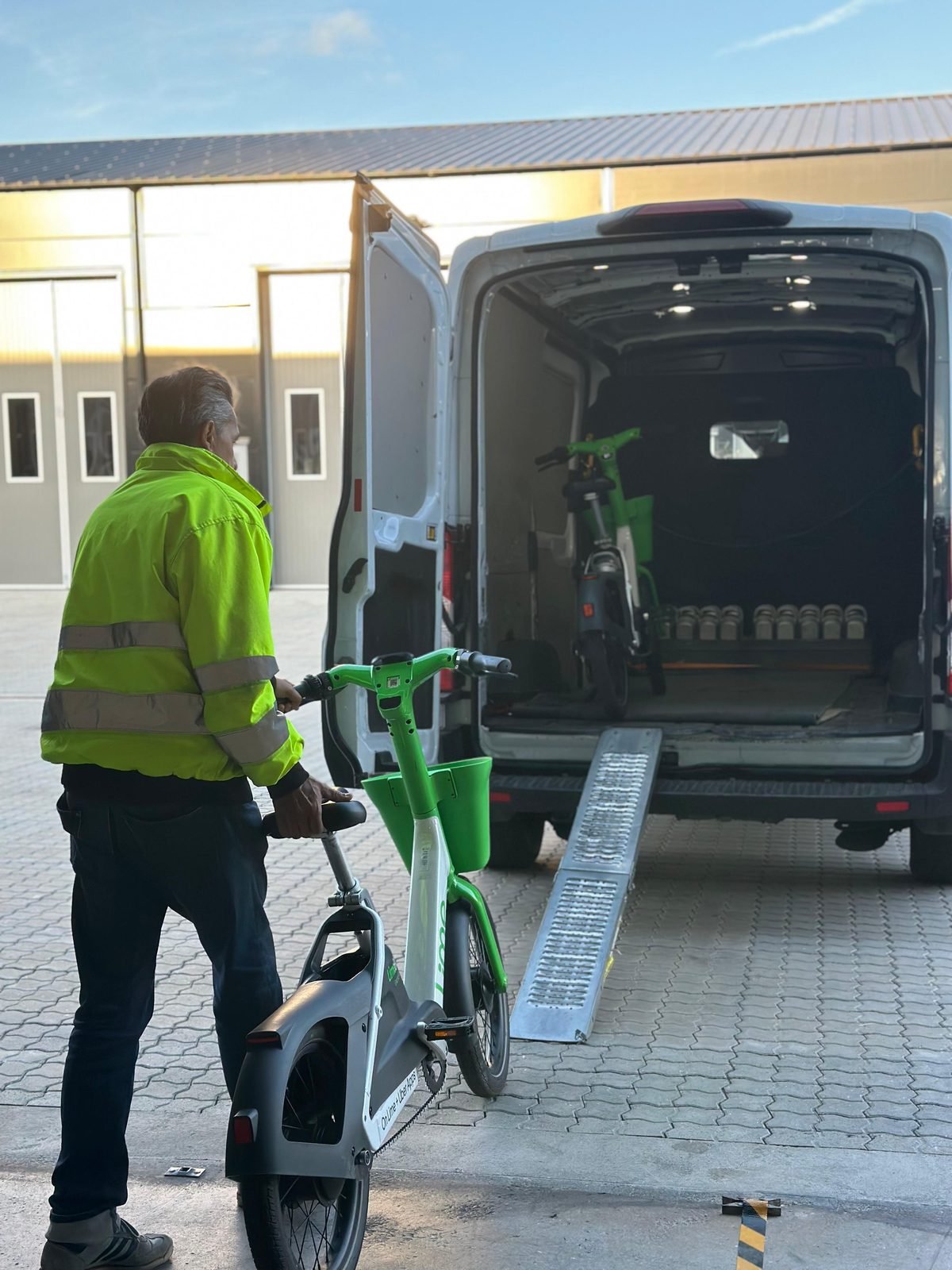
CASE STUDY · PORTUGAL OPERATOR · E-BIKE · 60 DAYS
Executed through our repair and workshop operations service line.
Repair backlog cut 45%. MTBF +30%.
An Iberian e-bike last-mile operator was losing rides to downtime. The fix was operational, not technical.
Context.
E-bike last-mile delivery fleet in Lisbon and Porto. 300+ vehicles in a repair backlog growing faster than warehouse throughput. MTBF trending down quarter-on-quarter. Rides lost to off-street vehicles estimated at 8–12% of total fleet earnings.
The problem.
- Field crew sending every damaged vehicle to the warehouse — no first-pass street repair.
- Warehouse intake queue processing 60% of weekly intake. Backlog compounding.
- Parts inventory managed on best-guess. Shortages blocking repair cycle.
- MTBF not reported. Nobody owning the number.
What we did.
- Week 1. Audit. Repair ticket stream parsed to identify Level 1 fixable issues. Street-repair kit defined.
- Week 2. Field crew retrained. Level 1 fix-on-street protocol deployed. Parts inventory moved to a pull-based replenishment trigger on client SKU list.
- Weeks 3–6. Warehouse throughput cleared backlog. Intake queue reduced from 300+ to under 80.
- Weeks 7–8. MTBF reporting live. Weekly numbers shared with client ops and finance teams.
Outcome at day 60.
| Metric | Before | Day 60 |
|---|---|---|
| Repair backlog | 300+ vehicles | <80 vehicles |
| Street first-pass fix rate | 12% | 68% |
| MTBF trend | falling QoQ | +30% |
| Warehouse throughput | baseline | 2× |
We thought we had a parts problem. Binny showed us we had a workflow problem. Same team, different protocol, 45% less backlog.
Head of Operations, Portugal e-bike operator
Margin stuck in your repair queue?
30-minute call. We’ll benchmark your backlog, MTBF, and throughput against this case.